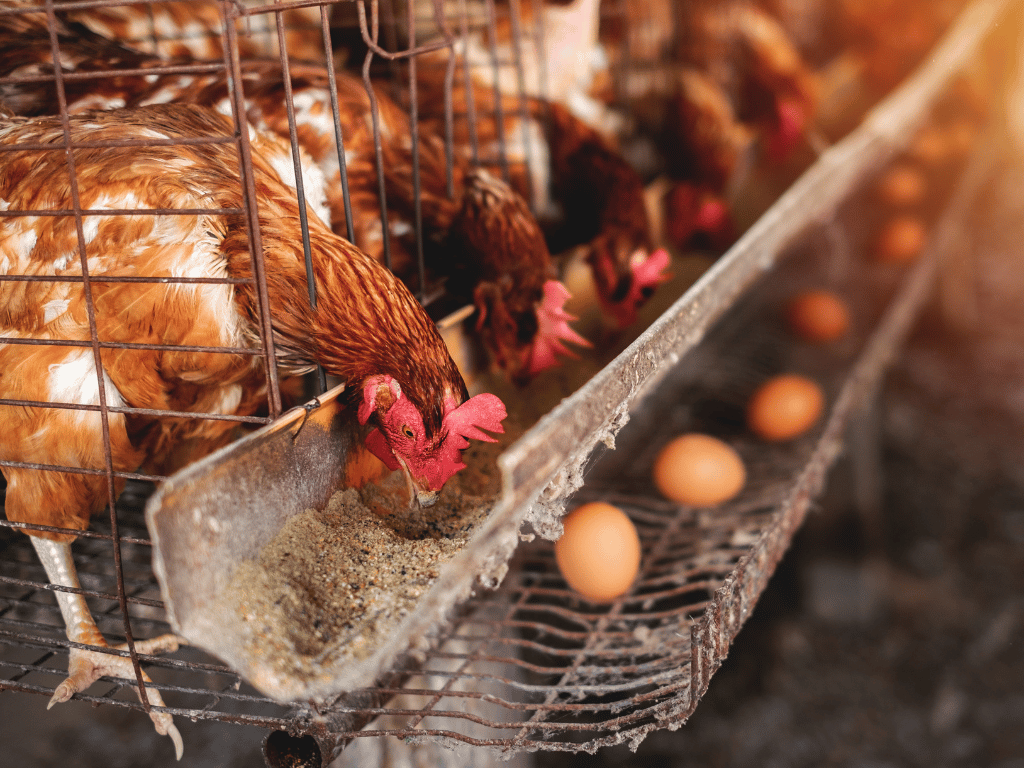
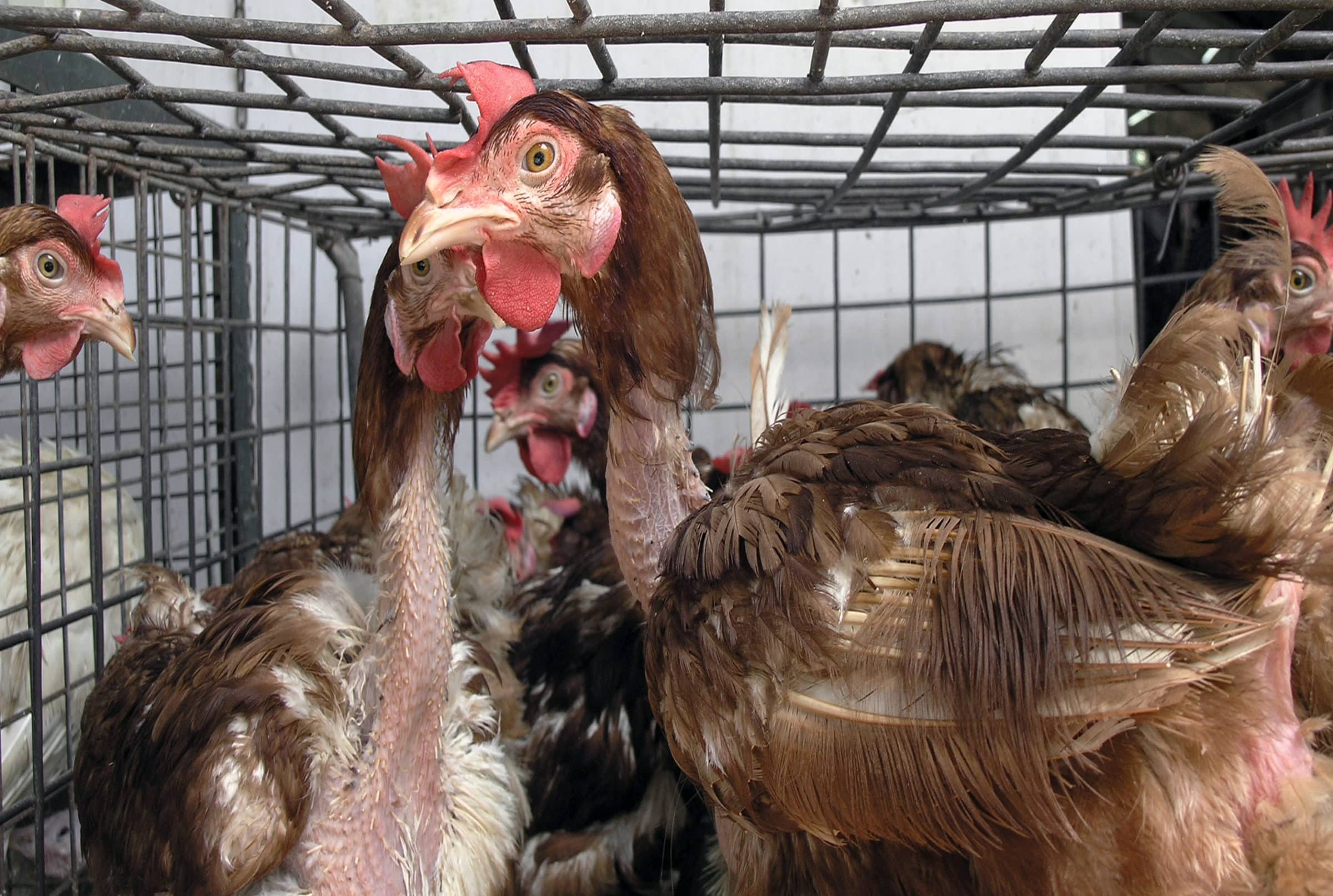
India is the world’s third-largest egg producer, with more than four crore hens trapped in egg farms across the country. Most hens are forced to spend their lives confined to tiny wire “battery” cages, each bird given floor space about the size of a sheet of A4 paper. Continual contact with cage wire often causes feather loss, chafed skin, and crippling foot problems. Suffering chronic stress from intensive confinement, many hens engage in unnatural behaviours, including self-mutilation and cannibalism.
Battery Cages and Cruelty
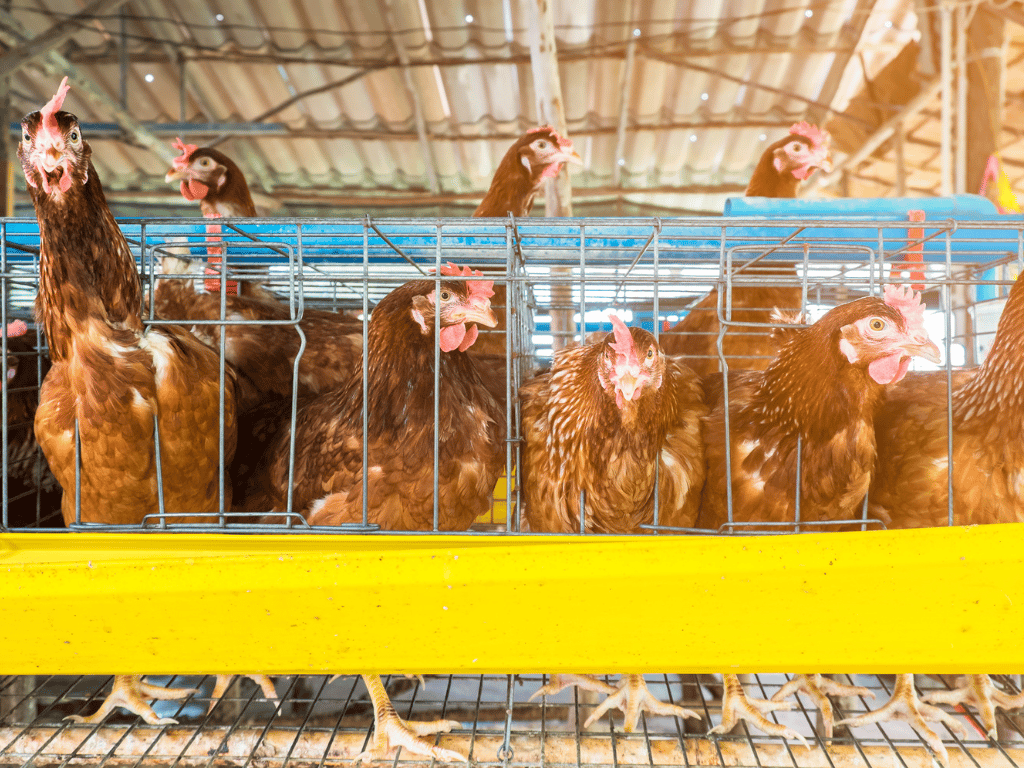 Hens in the egg industry are crammed into “battery” cages, small wire cages placed side by side, each holding several hens. With floor space per bird roughly the size of a sheet of printer paper, hens are unable to perform many natural functions, such as foraging, nesting, and cleaning their feathers. They can’t even spread their wings. Because of their cramped conditions, hens inevitably defecate and urinate on one another.
Beak Trimming
Cage confinement isn’t the only cruelty these intelligent, sensitive animals face. When hens are in cramped cages, they naturally become frustrated and stressed, which can cause them to peck at one another. The egg industry tackles the problem of aggressive feather pecking not by giving hens more space but by cutting off the tips of their beaks, usually with a hot blade without any anaesthesia. This extremely painful procedure is done when the birds are just a few days old.
Killing Male Chicks
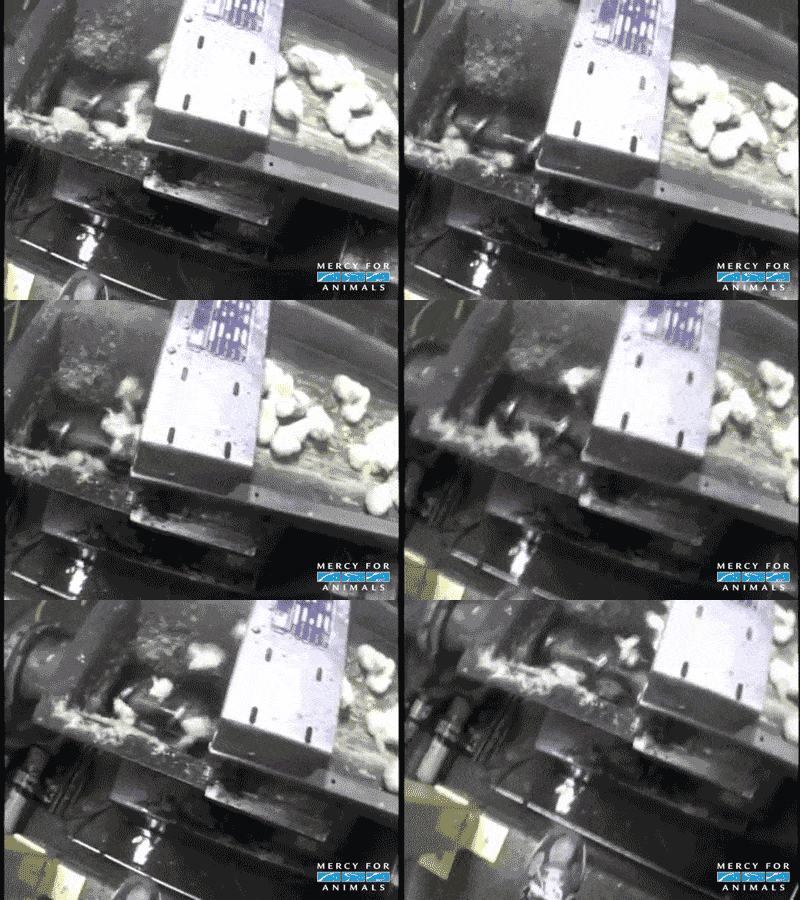 Because male chicks in the egg industry will not lay eggs or grow quickly enough to be raised profitably for meat, they are typically killed within hours of hatching, often in barbaric ways—drowned, gassed, and ground up or burned alive. These sensitive animals are treated as inanimate objects according to their profitability.
Forced Moulting
Transport
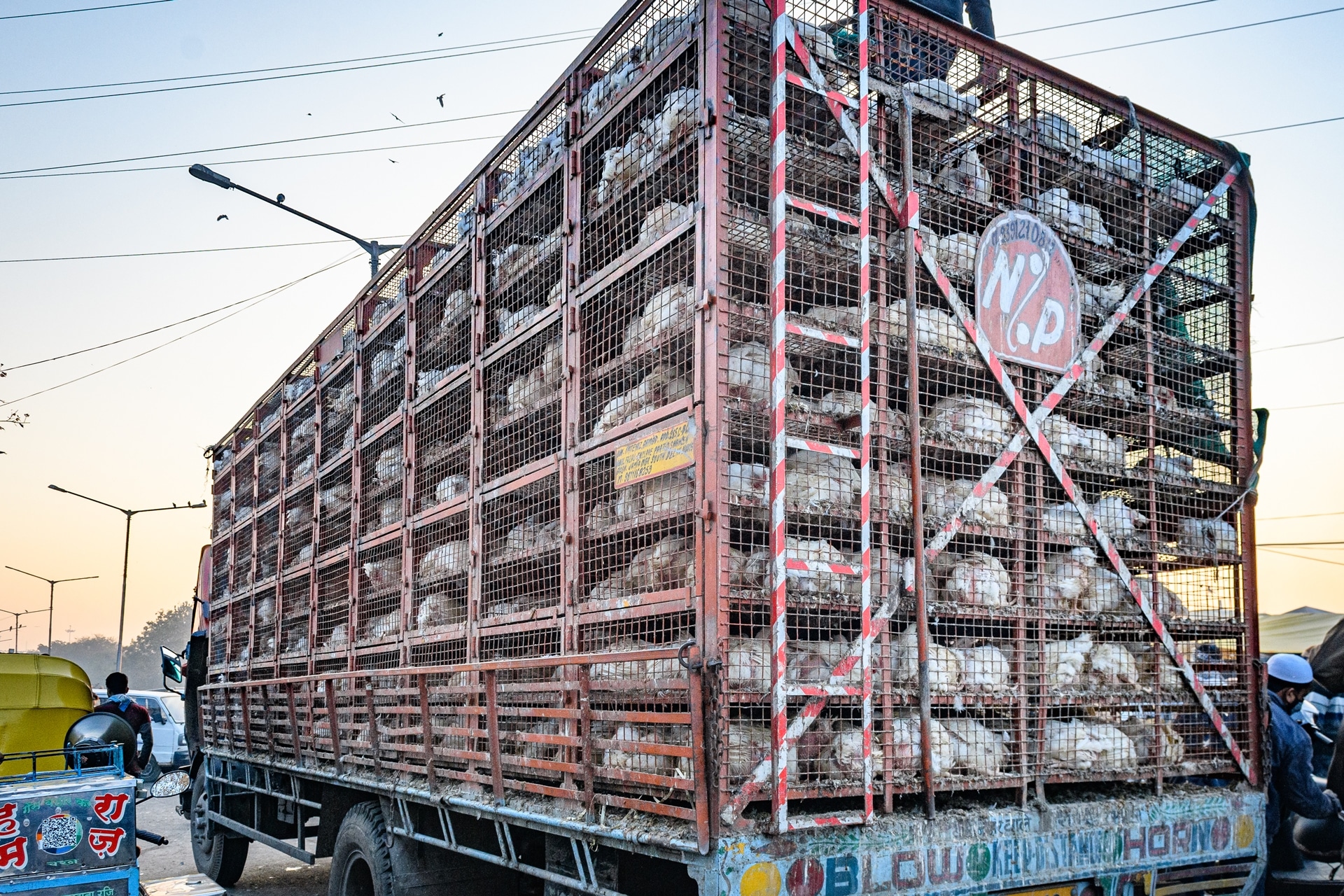
When their egg production drops, hens are sent to slaughter. They are transported to slaughterhouses in cages. The entire process is stressful.
The first step is deprivation. For eight to 12 hours before transport, hens are denied food and water in an effort to prevent faecal contamination. Then they are transferred from one cage to another. This is usually done by lifting them upside down by their legs. Because of worker haste, hens often suffer bruising, broken bones, and haemorrhages. Some even die.
Unnaturally Short Lives
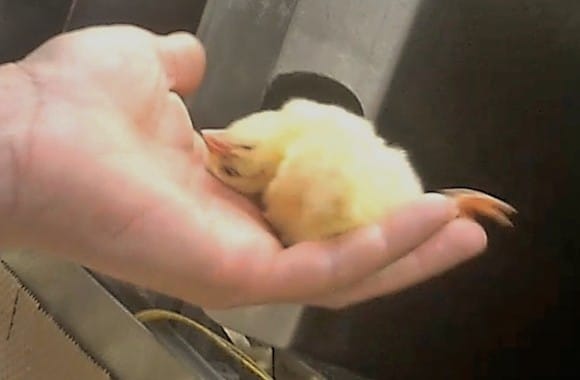 While hens can live an average of 10 to 12 years, in modern farms they are killed when their egg production declines, around their second birthday.
Little to No Veterinary Care
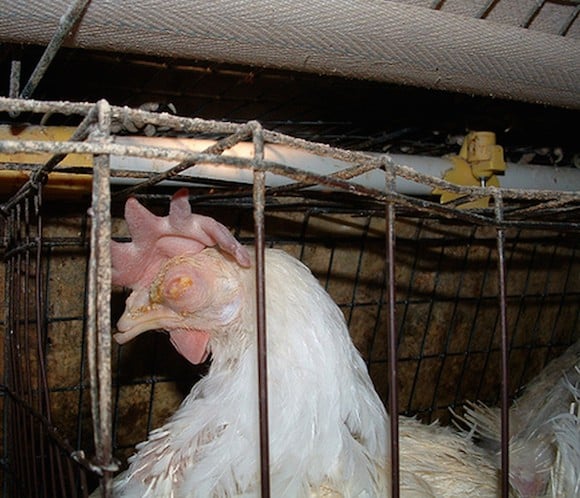 Many hens are left to suffer from open wounds, serious injuries, and infections without proper veterinary care.
Time for Change
More people are learning the truth about the egg industry and calling for an end to abuse. Recently, on World Egg Day, Mercy For Animals volunteers packed themselves into cages, wearing bloodied clothes and holding placards that read, ‘Hens Suffer for Eggs; Go Vegan’.
We can all help spare hens a life of misery in the egg industry by choosing plant-based foods, such as EVO’s new vegan egg. For help with plant-based eating, check out our blog post on tips for staying vegan.